
Show Summary:
This thought-provoking episode explores the fascinating and sometimes troubling world of rumours. Why are we often drawn to gossip and rumours rather than actively seeking the truth? Understanding our inclination toward rumours is more critical than ever in an age dominated by social media, where true and false information spreads at lightning speed.
Michael delves into the psychological, philosophical, and scientific reasons behind our fascination with rumours. We draw insights from three key areas:
Stoic Philosophy:
- The ancient Stoics had much to say about living a virtuous life and handling our challenges. They taught us to focus on what we can control—our thoughts and reactions—and not get swept up by the opinions of others. We discuss how Stoic wisdom can help us remain calm and composed in the face of gossip and rumours.
Neuroscience:
- We explore what happens in our brains when we hear a rumour. With insights from modern neuroscience, we learn how our brains are hardwired to pay attention to social information, especially when it's senit'sonal or emotionally charged. The episode examines how the amygdala and prefrontal cortex affect our response to rumours.
Emotional Intelligence:
- Emotional intelligence (EI) is crucial for managing our reactions to rumours. We discuss how being self-aware, empathetic, and skilled in managing relationships can help us handle gossip more effectively. Insights from psychologist Daniel Goleman highlight how EI can guide us to respond thoughtfully rather than impulsively.
The Impact of Social Media:
- Social media is a powerful amplifier for rumours today. We examine how platforms like Twitter, Facebook, and Instagram quickly spread information—often misinformation—creating a sense of urgency and credibility. We discuss the echo chamber effect and how it reinforces our beliefs, making rumours seem more believable.
Key Quotes and Ideas Featured:
- Epictetus on Listening: "We have "two ears and one mouth so that we can listen twice as much as we speak." We use the importance of discerning what we listen to and not letting every rumour take root in our minds.
- Marcus Aurelius on Truth: "If it is" not right, correct do it; if it is not valid, do not say it." The episode explores how adhering to truth and integrity can help us rise above gossip.
- Daniel Goleman on Emotional Intelligence: "Emotion" l intelligence is not about being soft. It's about keeping bright with your emotions." This quote underscores the importance of being emotionally savvy in handling rumours.
- Nicholas DiFonzo on Rumour Psychology: "People "hare rumours to make sense of situations and to feel more informed or in control." We discuss how social media exploits this aspect of human psychology, making rumours more appealing.
Takeaways for the Audience:
- Understanding the natural inclination toward rumours can help us become more mindful of our responses.
- Applying Stoic principles can provide a framework for dealing with gossip calmly and rationally.
- Neuroscience highlights the importance of engaging our rational minds when faced with rumours.
- Developing emotional intelligence is crucial for managing our reactions and maintaining healthy relationships.
- Awareness of social media's role in spreading rumours can help us be more critical of online information.
As we go about our daily lives, let's take a moment to pause and think before reacting to the latest rumour. Seek the truth, practice empathy, and remember the wisdom of the Stoics: focus on what you can control—your thoughts and actions. Challenge yourself to be a seeker of truth, not just a listener of rumours.
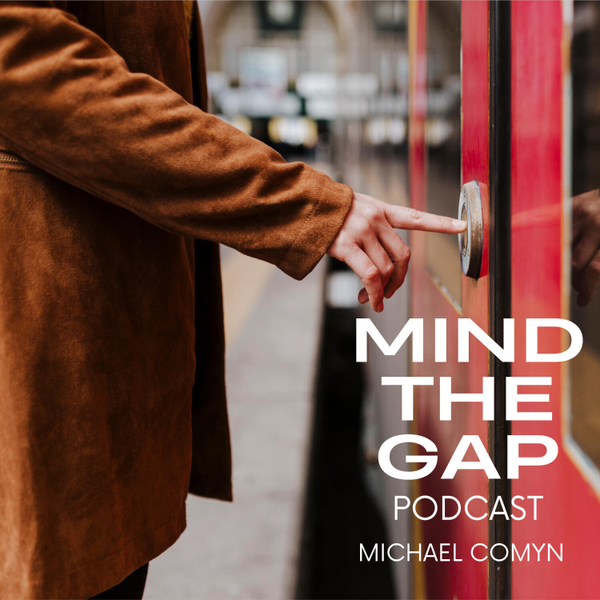
Mind the Gap
You already know my voice. For twenty-five years, I've been telling you to mind the gap on trains across Ireland. This is the same instruction. The gap is just different now.
Mind the Gap is a podcast about the space between what we think we're doing and what we're actually doing. Between intention and impact. Between the behaviour we display and the one we'd choose if we were paying attention.
Each episode is a short reflection — drawn from psychology, philosophy, and the texture of everyday life — on one of those gaps. Why do we give advice nobody asked for? Why do we lie more after the mistake than during it? Why do we perform contentment, perform listening, perform strength? And what it costs us when we do.
I'm Michael Comyn — coach, broadcaster, and the voice on the platform. New episodes weekly.
Support Us
You already know my voice.
For twenty-five years, I've been telling you to mind the gap on trains across Ireland. This is the same instruction. The gap is just different now.
Mind the Gap is a podcast about the space between what we think we're doing and what we're actually doing. Between intention and impact. Between the behaviour we display and the one we'd choose if we were paying attention.
