
S12 E6 Quincy: a case study in causes of failure Part 2
- S12E5
- 12:58
- February 8th 2023
In this podcast, I continue to look into why a promising start-up, Quincy Apparel, that had everything going for it, failed. Today I look at the launch of their first season.
The story so far.
Founded by two Harvard Business School MBA graduates Christina Wallace and Alex Nelson. Quincy Apparel was going to bridge the gap between companies that offered affordable women’s suits, which in the words of Quincy’s business plan, “gape and hang like ill-fitting boxes,” and high-end brands that offered more fashionable suits at higher prices. Quincy would offer the high-end brands better fitting and feeling clothes at lower prices.
Quincy Apparel would follow a business model pioneered by two vertically integrated start-ups. Bonobos, which sold men’s pants, and Warby Parker, which sold eyewear, both were achieving success both in the marketplace and in attracting investor interest. Both companies demonstrated that the direct-to-customer model could work in the fashion industry.
Quincy Apparel developed a new size system that allowed better-fitting clothes and tested the concept at a series of trunk shows. The trunk shows had proven to be a success; with 50% of young professional women attending making purchases averaging $350. These were not token purchases but a vote of confidence in the product and the fledgling company.
The company was about to launch its first season.
For full details of Quincy Apparel’s early day please read Quincy Apparel Part One.
Preparing for a hard launch.
The co-founders of Quincy Apparel recognized that offering multiple sizing options for each garment would add complexity to the production process and therefore result in higher costs. But they felt that the direct-to-consumer model, eliminating the wholesaler and retailer, would enable them to be cost-competitive. The fact that inventory would be held at a single location rather than multiple retail outlets would be a further advantage. Inventory management would be a challenge, so a two-step production process was developed. Large-scale production that took the garments to 80% of completion would be outsourced to larger factories. These semi-finished items would be stored at Quincy’s rented warehouse. The warehouse would do multiple duty as a showroom, and an office. When a customer placed an order, the garments would be sent to a finishing unit for the final sewing to complete the production process. The finished garment would be returned to Quincy’s warehouse for despatch to the customer. As production was based on actual demand the founders hoped to avoid the end-of-season markdowns that often erode profitability in the fashion industry. To put this in context, in 2022 Boston Consulting Group stated “Retailers around the world invest more than $1 trillion in their in-season and end-of-season markdown programs”
Practical Solutions to Difficult Problems with Jeremy Gray
After over 30 years in the MNC corporate world at the C-suite or General Manager level I am now focused on helping Entrepreneurs and SME's succeed. Using the lessons learned from working in Europe, North America and Asia while as an MNC executive along with 7 years supporting smaller businesses I bring this knowledge to my listeners. The topics will change but the message will remain the same, how to profitably grow your business.
Jeremy joined the IBGR.Network to build his next career focusing on developing strategies that accelerate revenue, profit, and long term growth. The size or age of your business doesn't matter, only the size of your dreams. He can help you get there with:
- Mergers and Acquisition Support - building your company to sell? Looking to grow from buying your competitors?
- Business Turnarounds - your dream is failing and you don't know where to start?
- FP&A, Budgeting and Cash Flow - profitability is driven by the ability to manage cash flow!
- Staff Development - are you the only competent person around and success is possible if surrounded by equals?
- Strategic Planning - how to plan a future that is achievable and achieve it!
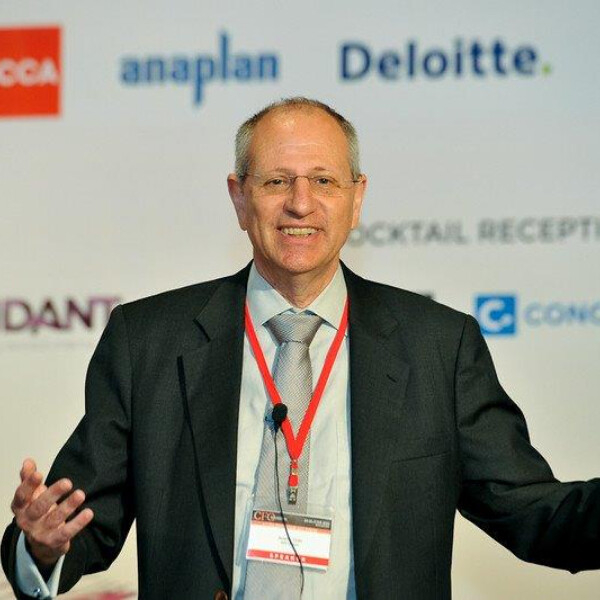
"In business set backs are inevitable – defeat is not. If you have a difficult problem let me help you to find a practical solution"
Jeremy has over 35 years of experience in senior Finance roles and General Management based in Europe, USA and most recently Asia. He is an experienced CFO who has helmed troubled operations in the USA, China, Japan and, turning their poor performance into profitable businesses.
He has also led M&A projects across the globe including an acquisition in China, that was a first for his MNC employer at the time.
Jeremy enjoys sharing his wealth of experience and knowledge with others, having participated in CFO Innovation Conferences in Singapore, Hong Kong, Shanghai and Bangkok. It has become a passion for him to use the expertise he has honed over the years to support SME owners with revenue and profit enhancement programs while imparting strategic development skills to help grow their businesses.
Jeremy broadcasts LIVE from Viet Nam