
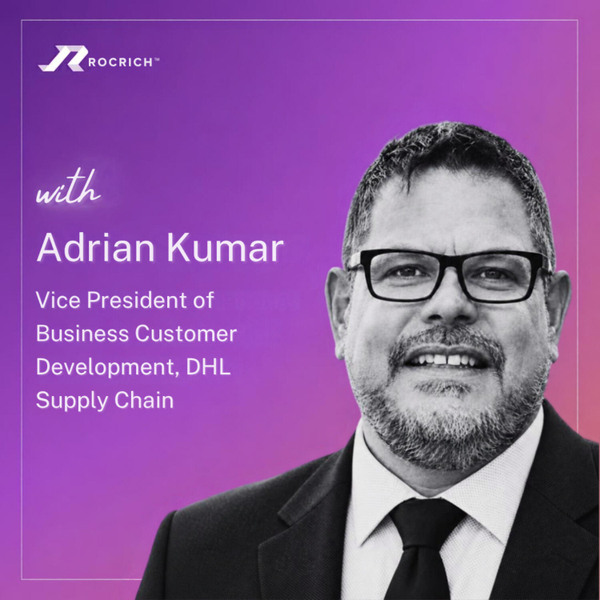
How to Stress-Test Your Automation Business Case Before the Board Signs Off
- S1E8
- 1:00:05
- October 1st 2026
A former DHL executive who oversaw as many as 500 automation projects a year explains why so many warehouse automation business cases fall apart after go-live.
You built the business case, got sign-off, and installed the system. Then the SKU mix shifts, peak volume spikes, and inventory accuracy falls apart, and suddenly the numbers don't add up.
Adrian Kumar spent more than two decades at DHL in third-party logistics, designing and evaluating automation solutions across hundreds of projects a year. Now working independently, he brings a bias-free view of where mobile automation pays off and where it quietly fails.
Listen and you'll get a practical checklist for evaluating any automation project: the vendor questions that expose weak business cases, the assumptions that get glossed over during solution design, and the operational realities that only show up after go-live. Adrian breaks down why some AGV and robotics investments scale successfully for years while others get ripped out after five.
This episode covers due diligence for vendor selection, brownfield constraints, peak-volume stress testing, inventory accuracy, and the indirect labor costs automation vendors don't always mention. It's built for operations leaders preparing their first automation business case, not for anyone looking for a vendor sales pitch.
## Key Takeaways
- One vendor question separates the honest suppliers from the ones overselling their technology, and it's not about their success stories.
- Solution designs get built on ideal-case assumptions. Adrian explains which real-world variables (SKU mix, returns, non-conveyable items) blow those assumptions up on day one.
- A major retailer invested tens of millions in a pick-to-belt system that got ripped out years later. The reason wasn't the technology, it was math nobody stress-tested upfront.
- Peak volume planning isn't a formula. Adrian lays out when designing to peak makes sense and when leasing flexible capacity is the smarter play.
## Chapter Markers
00:00 Cold open: the risk of large automation write-offs
00:32 Guest introduction: Adrian Kumar's 3PL background
01:20 What the automation market gets wrong today
02:51 Why solution design assumes ideal conditions
05:13 Go-live surprises that expose bad assumptions
08:13 Cookie-cutter rollouts versus bespoke automation builds
10:35 How automation decisions changed over 20 years
12:53 Are automation success rates actually improving
15:31 Where customer assumptions go wrong upfront
18:08 Starting small before a big-bang investment
20:53 Lighthouse sites versus multi-site pilot testing
23:43 Where suppliers overstate achievable productivity
26:39 The vendor questions every customer should ask
30:24 Auditing automation performance years after go-live
34:41 The pick-to-belt system that got ripped out
36:13 Ergonomics and the human case for automation
38:13 Has brownfield-friendly automation caught up
40:43 Evaluating new mobile robot technology
43:14 Where automation wins are today: travel, pick, storage
46:06 How bad inventory data breaks automated systems
49:20 The assumption to stress-test before sign-off
51:50 Designing for peak volume versus staying flexible
54:51 The McDonald's lesson in balance and ergonomics
57:48 Closing thoughts: the vendor question that reveals honesty
Useful Links & Resources
Adrian Kumar on LinkedIn: https://www.linkedin.com/in/adriankumar/
Rocrich AGV Solutions: https://www.rocrich.com
Connect With the Show
LinkedIn: https://www.linkedin.com/company/rocrich/
Website: https://rocrich.com/contact/
The Automation Journey | A Podcast from Rocrich AGV Solutions
Mobile automation is messy. Brownfield constraints. Finance is pushing back on ROI. Safety sign-offs. Departments that need actually to work together. The Automation Journey cuts through the noise and helps you make decisions that stick.
Each episode tackles one fundamental question: Where do we even start? How do we build a business case that finance will believe? What does "safe by design" actually mean? How do we avoid vendor lock-in?
Hosted by Rocrich AGV Solutions, a team that has implemented automation in some of the toughest manufacturing and logistics environments, the show shares lessons from practitioners, safety leaders, and integration professionals who’ve been there.
The show is for operations and engineering leaders in manufacturing, logistics, food & beverage, and pharma - anyone who influences automation decisions, safety approvals, or budgets.
You'll get clear first steps, plain-English safety and standards guidance, integration playbooks, and credible ROI framing you can actually use, plus actionable tools and industry updates to keep your plans on track.