
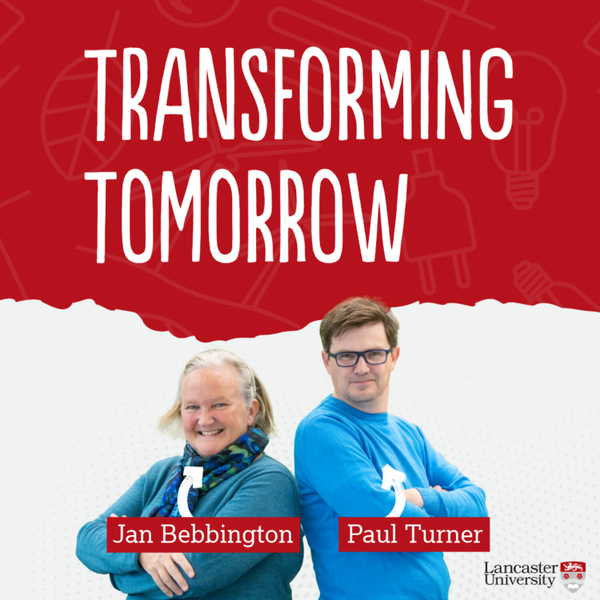
It’s time to go back to outer space – and to explore another frontier region – as we push the boundaries of sustainability in new directions.
We bring together Donald Trump, satellites, Greenland, rocket launches, polar bears – and penguins – to explore the connections between the Arctic and Outer Space.
Dr Mia Bennett, from the University of Washington, has seen a polar bear in Svalbard, but her expertise is on the indigenous people of the Arctic and how the space industry has grown in their homeland and affected their lives.
She tells us how her dreams of being an astronaut evolved into an interest in the Earth’s poles, and then the links between them in the forms of satellites, inter-continental missiles, and spaceports.
We go back to the origins of the connections between the Arctic and space, when stars were used to navigate and to monitor the seasons; how the threats of the Cold War turned the Arctic into a region to monitor space, and the impacts of this development on the land and the local peoples.
We discover how populations have been displaced and damaged by colonial and militaristic expansions, how land and sea have been polluted by radioactive waste, how food systems have been disrupted, and how Trump’s Greenland obsession fits into the bigger historical picture.
But we also learn how the growth in the satellite industry – particularly Elon Musk’s Starlink network – has brought jobs to new areas through ground stations in the harsh environs of the far north, and that there are other benefits for the indigenous communities as well.
Jan dredges up her worst snow-related puns, Paul ponders why he keeps forgetting Greenland is an island, and we ask, what is the perfect number of penguins in a fight?
Mia and Klaus Dodds have written a book about the future of the Arctic, Unfrozen: The Fight for the Future of the Arctic. Discover it here: https://yalebooks.co.uk/book/9780300259995/unfrozen/
Read about the Outer Space Treaty here: https://www.unoosa.org/oosa/en/ourwork/spacelaw/treaties/introouterspacetreaty.html
And find out more about Mia and her work here: https://www.cryopolitics.com
Transforming Tomorrow
Sustainability is key for any business that wants to build a lasting legacy. From carbon footprints to biodiversity to modern slavery, seabeds to factory floors, everything matters.
On Transforming Tomorrow, we make the complex understandable, the theory practical, as we guide you through the ever-changing and often exciting world of sustainability in business.
Speaking to internationally renowned experts and business leaders, we uncover how to mainstream environmental, social and economic sustainability into purposeful business strategy and performance.
Whether you are leading transition in your business, want to build a corporation with a green heart or change your individual actions, or just want to know more about how space weather might affect your operations, Transforming Tomorrow is the show for you.
Hosts Jan and Paul bring insight, perspective, and not a little amount of disagreement, to all the subjects, helping you find the message among the madness.
Join us every Monday to uncover new insights and become a little more inspired that you can make a difference.
You can find transcripts for most episodes at: https://www.lancaster.ac.uk/pentland/resources-for-education-and-practice/transforming-tomorrow-podcast/transcripts/
Send your questions on any of the issues we discuss in Transforming Tomorrow to [email protected] or fill in our feedback form here: https://forms.office.com/e/7Bw4rDiRDt
Find out more about the Pentland Centre and its work here: https://www.lancaster.ac.uk/pentland/
Meet the Hosts
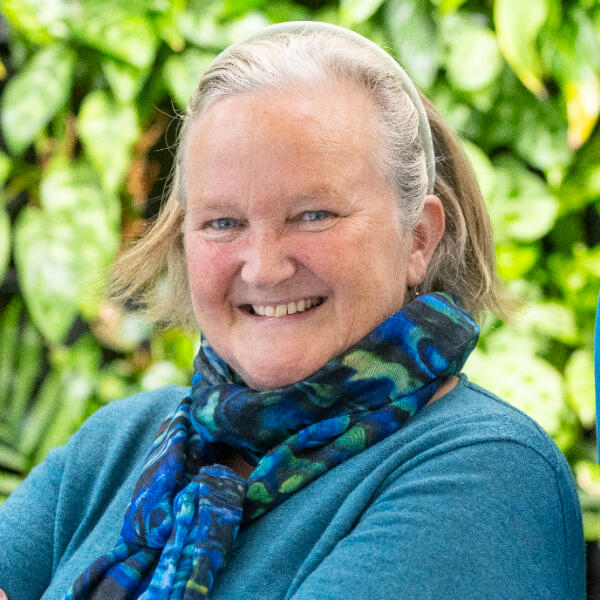
Professor Jan Bebbington is the Director of the Pentland Centre for Sustainability in Business at Lancaster University. Jan is an expert on accounting, benchmarking (to her co-host’s annoyance), and how business and sustainability intersect.
Jan loves nature and wants to protect it – and hopes she can change the world (ideally for the better). She is also motivated to address inequality wherever it is found and especially to eliminate forced, bonded or child labour. Transforming Tomorrow is one small step on that quest.

Paul Turner is a former sports journalist who now works promoting the research activities in Lancaster University Management School – a poacher turned gamekeeper as his former colleagues would have it.
Paul has always been interested in nature and the natural environment – it comes from growing up in Cumbria – and has been a vocal proponent of the work of the Pentland Centre since joining Lancaster University. He does not like rankings and benchmarking, and is not afraid to say so.