
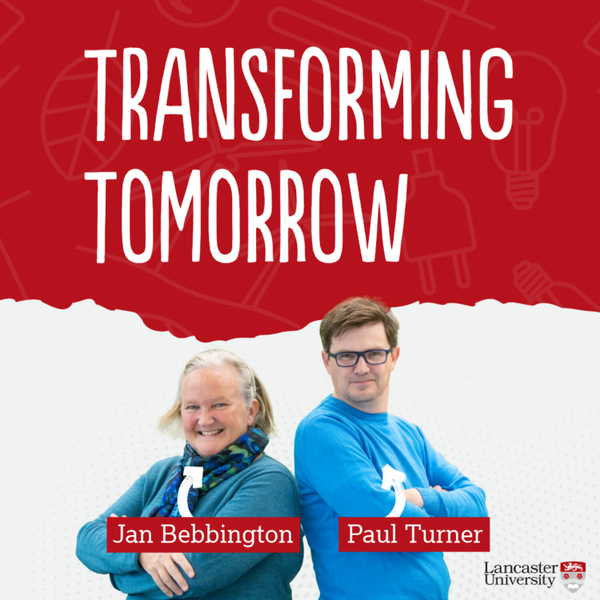
People are trafficked illegally around the world every day. They are coerced and exploited – the victims of criminal gangs, of war, of poverty, and are exploited for commercial and sexual means.
We return to the topic of modern slavery, this time with someone who has experience on the ground in the UK, Greece, Australia, and Bangladesh, and who has some shocking tales to tell.
Kyla Raby is an antislavery specialist completing her PhD at the University of South Australia. She has designed and managed support services for refugees and survivors of trafficking, is a Non-Executive Director of Be Slavery Free, and was an inaugural member of the New South Wales Anti-Slavery Commissioner's advisory panel. In other words, she knows her stuff.
We uncover the extent of human trafficking into the UK and the development of response services; how Modern Slavery Acts in Britain and Australia changed the situation in the two countries; the problem of forced marriage and domestic violence; the importance of recognising the impact of trauma on trafficking victims and building support structures; and the problem of relying on consumer behaviour to force corporations to change their actions on modern slavery in their supply chains.
Kyla talks us through her time in Cox’s Bazar, the world’s largest refugee camp on the border of Bangladesh and Myanmar – home to around 1.4 million people (which would make it the second-largest city in the UK). This is a hotspot for human trafficking, and one negatively affected by cuts to global aid funding. And we compare this with Greece in 2016, towards the end of the refugee crisis.
Kyla is also Australian, prompting Jan to test Paul out on his knowledge of the differences between New Zealand and Oz, and create a new species of koala bears made from kiwi fruit.
Watch the Everyday Slavery series here: https://www.youtube.com/@Everyday_Slavery
Find out about the Palermo Protocol, designed to present, suppress and punish trafficking in persons: https://www.ohchr.org/en/instruments-mechanisms/instruments/protocol-prevent-suppress-and-punish-trafficking-persons
And the California Transparency in Supply Chains Act: https://oag.ca.gov/SB657
And, finally, discover more about Kyla and her work here: https://people.unisa.edu.au/Kyla.Raby#About-me
Transforming Tomorrow
Sustainability is key for any business that wants to build a lasting legacy. From carbon footprints to biodiversity to modern slavery, seabeds to factory floors, everything matters.
On Transforming Tomorrow, we make the complex understandable, the theory practical, as we guide you through the ever-changing and often exciting world of sustainability in business.
Speaking to internationally renowned experts and business leaders, we uncover how to mainstream environmental, social and economic sustainability into purposeful business strategy and performance.
Whether you are leading transition in your business, want to build a corporation with a green heart or change your individual actions, or just want to know more about how space weather might affect your operations, Transforming Tomorrow is the show for you.
Hosts Jan and Paul bring insight, perspective, and not a little amount of disagreement, to all the subjects, helping you find the message among the madness.
Join us every Monday to uncover new insights and become a little more inspired that you can make a difference.
You can find transcripts for most episodes at: https://www.lancaster.ac.uk/pentland/resources-for-education-and-practice/transforming-tomorrow-podcast/transcripts/
Send your questions on any of the issues we discuss in Transforming Tomorrow to [email protected] or fill in our feedback form here: https://forms.office.com/e/7Bw4rDiRDt
Find out more about the Pentland Centre and its work here: https://www.lancaster.ac.uk/pentland/
Meet the Hosts
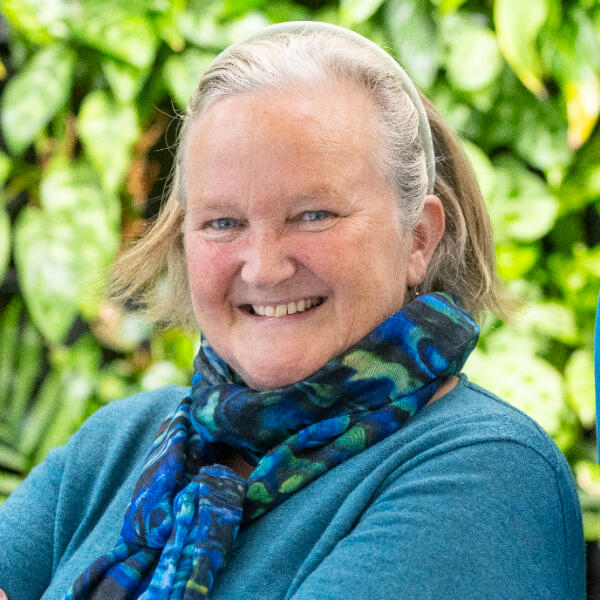
Professor Jan Bebbington is the Director of the Pentland Centre for Sustainability in Business at Lancaster University. Jan is an expert on accounting, benchmarking (to her co-host’s annoyance), and how business and sustainability intersect.
Jan loves nature and wants to protect it – and hopes she can change the world (ideally for the better). She is also motivated to address inequality wherever it is found and especially to eliminate forced, bonded or child labour. Transforming Tomorrow is one small step on that quest.

Paul Turner is a former sports journalist who now works promoting the research activities in Lancaster University Management School – a poacher turned gamekeeper as his former colleagues would have it.
Paul has always been interested in nature and the natural environment – it comes from growing up in Cumbria – and has been a vocal proponent of the work of the Pentland Centre since joining Lancaster University. He does not like rankings and benchmarking, and is not afraid to say so.