
Health is not just about us as individuals. It’s about the whole planet. It’s time we think about health on a worldwide scale.
Professor Jemilah Mahmood is Executive Director of the Sunway Centre for Planetary Health at our old friends Sunway University, in Malaysia. As a medical professional who has helped deliver 15,000 babies(!), she knows healthcare from the personal level. But she also has decades of experience managing crises in health, disaster and conflict settings.
Jemilah talks us through her career and how watching a woman stranded with her newborn baby in a tree above crocodile-infested floodwaters in Mozambique led her to focus on equity and justice, helping those affected by conflict and disasters.
She tells us about the concept of planetary health – and the similarities and differences to the one health agenda; the role of the Sunway Centre for Planetary Health as a ‘think-and-do-tank’, which includes experts from across multiple disciplines; and how those who make the least impact on the environment are often those worst affected by the changing climate.
We look at the links between planetary health and the planetary boundaries; the concept of Return on Value, rather than Return on Investment; the importance of planetary health concepts in a university education; and the world-leading National Planetary Health Action Plan in Malaysia, and how it aligns economic growth with environmental resilience and societal well-being.
Plus, Paul reveals strongly held beliefs on brown rice; Jemilah emerges as a proponent of the living to eat mentality; Jan questions her energy levels; and we look at the power of optimism, agency and the next generation.
For more on the Sunway Centre for Planetary Health, see here: https://www.sunwayplanetaryhealth.com.my/
This is the Malaysian National Planetary Health Action Plan: https://www.akademisains.gov.my/nphap-full-report/
And see what it takes to move from return on investment to return on values here: https://sunwayuniversity.edu.my/sites/default/files/documents/2025-06/roi_rov_prospectus.pdf
Transforming Tomorrow
Sustainability is key for any business that wants to build a lasting legacy. From carbon footprints to biodiversity to modern slavery, seabeds to factory floors, everything matters.
On Transforming Tomorrow, we make the complex understandable, the theory practical, as we guide you through the ever-changing and often exciting world of sustainability in business.
Speaking to internationally renowned experts and business leaders, we uncover how to mainstream environmental, social and economic sustainability into purposeful business strategy and performance.
Whether you are leading transition in your business, want to build a corporation with a green heart or change your individual actions, or just want to know more about how space weather might affect your operations, Transforming Tomorrow is the show for you.
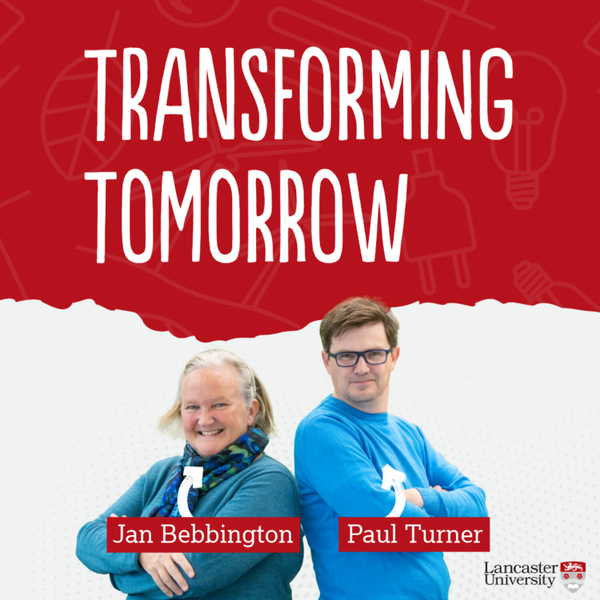
Hosts Jan and Paul bring insight, perspective, and not a little amount of disagreement, to all the subjects, helping you find the message among the madness.
Join us every Monday to uncover new insights and become a little more inspired that you can make a difference.
You can find transcripts for most episodes at: https://www.lancaster.ac.uk/pentland/resources-for-education-and-practice/transforming-tomorrow-podcast/transcripts/
Send your questions on any of the issues we discuss in Transforming Tomorrow to [email protected] or fill in our feedback form here: https://forms.office.com/e/7Bw4rDiRDt
Find out more about the Pentland Centre and its work here: https://www.lancaster.ac.uk/pentland/
Meet the Hosts
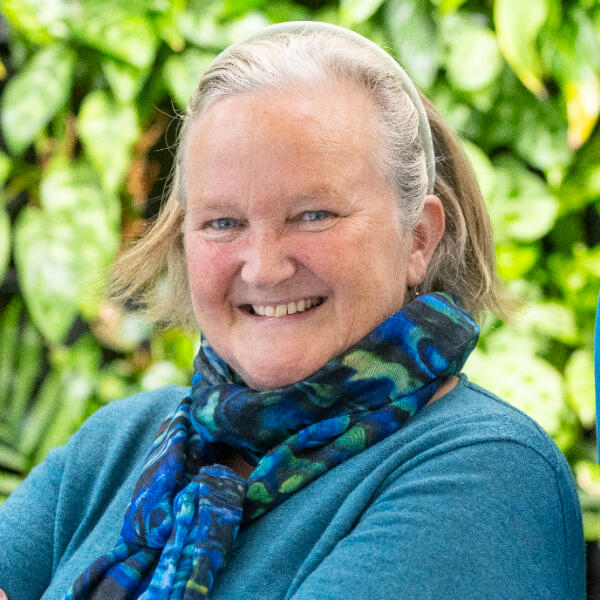
Professor Jan Bebbington is the Director of the Pentland Centre for Sustainability in Business at Lancaster University. Jan is an expert on accounting, benchmarking (to her co-host’s annoyance), and how business and sustainability intersect.
Jan loves nature and wants to protect it – and hopes she can change the world (ideally for the better). She is also motivated to address inequality wherever it is found and especially to eliminate forced, bonded or child labour. Transforming Tomorrow is one small step on that quest.

Paul Turner is a former sports journalist who now works promoting the research activities in Lancaster University Management School – a poacher turned gamekeeper as his former colleagues would have it.
Paul has always been interested in nature and the natural environment – it comes from growing up in Cumbria – and has been a vocal proponent of the work of the Pentland Centre since joining Lancaster University. He does not like rankings and benchmarking, and is not afraid to say so.