
What’s the weather like in space? This isn’t the British obsession with the weather gone made, it really exists!
It may not be covered in the TV forecasts, but it affects our lives – and on technology.
This is not Michael Fish and telling us about rain on Mars, or storms on Jupiter, but how solar activity influences us on earth.
Jim Wild is President-Elect of the Royal Astronomical Society and a Professor of Space Physics at Lancaster University, and is perfectly placed to tell us all about what space weather is.
He brings us up to (light) speed about solar flares, predicting the sun’s behaviour, how space operators can protect themselves, how it might affect you and your phone, the importance of the Earth’s magnetic field (and its similarities with the shields on the Starship Enterprise), monitoring the aurora borealis, and his work with UK infrastructure operators on the risk of space weather to their operations.
Plus, we learn about the Carrington Event in 1859, when telegraph lines went haywire after a giant solar flare erupted. What might happen if something similar were to occur in the modern electronic world? How often do these big solar events happen (and could they be bigger)? And how does it all tie in with the Northern Lights over Lancaster and GPS glitches for farmers and their tractors in California?
You can find out about Aurora Watch UK here: https://aurorawatch.lancs.ac.uk/
See the latest space weather forecasts from the UK Met Office here: https://weather.metoffice.gov.uk/specialist-forecasts/space-weather
And discover more about Jim and his work here: https://www.lancaster.ac.uk/sci-tech/about-us/people/jim-wild
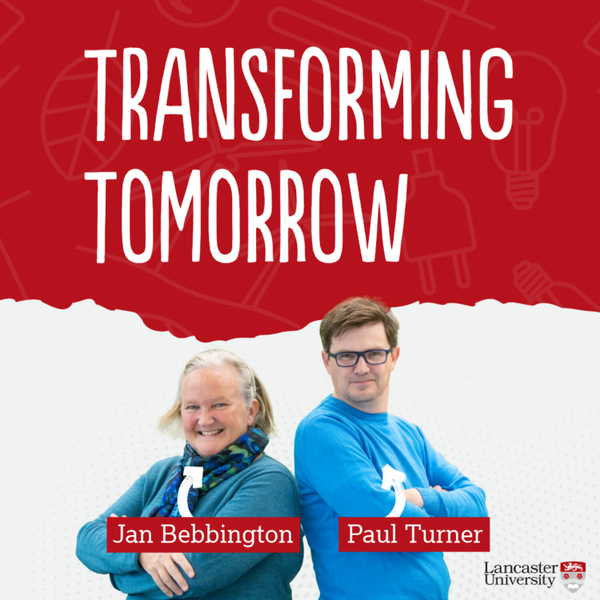
Transforming Tomorrow
Sustainability is key for any business that wants to build a lasting legacy. From carbon footprints to biodiversity to modern slavery, seabeds to factory floors, everything matters.
On Transforming Tomorrow, we make the complex understandable, the theory practical, as we guide you through the ever-changing and often exciting world of sustainability in business.
Speaking to internationally renowned experts and business leaders, we uncover how to mainstream environmental, social and economic sustainability into purposeful business strategy and performance.
Whether you are leading transition in your business, want to build a corporation with a green heart or change your individual actions, or just want to know more about how space weather might affect your operations, Transforming Tomorrow is the show for you.
Hosts Jan and Paul bring insight, perspective, and not a little amount of disagreement, to all the subjects, helping you find the message among the madness.
Join us every Monday to uncover new insights and become a little more inspired that you can make a difference.
You can find transcripts for most episodes at: https://www.lancaster.ac.uk/pentland/resources-for-education-and-practice/transforming-tomorrow-podcast/transcripts/
Send your questions on any of the issues we discuss in Transforming Tomorrow to [email protected] or fill in our feedback form here: https://forms.office.com/e/7Bw4rDiRDt
Find out more about the Pentland Centre and its work here: https://www.lancaster.ac.uk/pentland/
Meet the Hosts
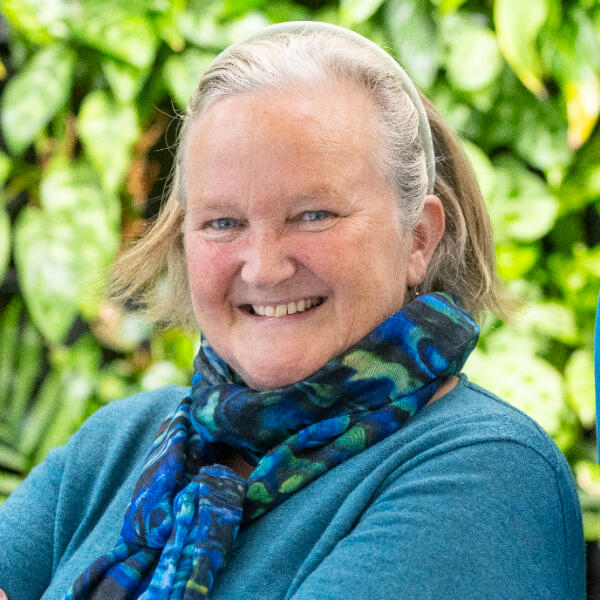
Professor Jan Bebbington is the Director of the Pentland Centre for Sustainability in Business at Lancaster University. Jan is an expert on accounting, benchmarking (to her co-host’s annoyance), and how business and sustainability intersect.
Jan loves nature and wants to protect it – and hopes she can change the world (ideally for the better). She is also motivated to address inequality wherever it is found and especially to eliminate forced, bonded or child labour. Transforming Tomorrow is one small step on that quest.

Paul Turner is a former sports journalist who now works promoting the research activities in Lancaster University Management School – a poacher turned gamekeeper as his former colleagues would have it.
Paul has always been interested in nature and the natural environment – it comes from growing up in Cumbria – and has been a vocal proponent of the work of the Pentland Centre since joining Lancaster University. He does not like rankings and benchmarking, and is not afraid to say so.