
What do you think of the economy? What would you do if you couldn’t afford insurance? What does a thriving community look like? And how can economic policy help that flourishing? These are all key questions when it comes to addressing societal equality and resilience.
Susan Murray is Director of the David Hume Institute, an Edinburgh-based economics-focused thinktank – despite not classing herself as an economist.
She joins us to talk about the importance of diversity in economic thinking, how resources are allocated across society, the changing nature of migration over the last 40 years, and three major projects the David Hume Institute is involved in.
We discuss the importance of local communities and place in contributing to shaping action and policy, how to reach and include ‘normal people’ in otherwise ignored places, the importance of recognising what we all have in common, and what it actually means to be thriving.
Susan introduces us to the Great Risk Transfer, how people consider risk in their own lives, the importance of having resources to manage those risks, and why people don’t always trust organisations such as insurance providers.
We look at public attitudes towards the economy and how they change; what people wanting to save rather than spend can tell us; and how economic and sustainability issues tie in with politics at a national level.
Plus, we discover how sustainability became a part of Susan’s life when she was young – via the media of Blue Peter and Raymond Briggs, the cause of Save the Whales, and under the threat of nuclear war.
And finally, we ask the important questions: When is an economist not an economist? What’s the difference between an accountant and an economist? Do accountants and economists ever walk into bars together? To hear if we ever get to the punchlines of these and other bad economics jokes, listen in.
To find out more about the David Hume Institute, visit: https://davidhumeinstitute.org/
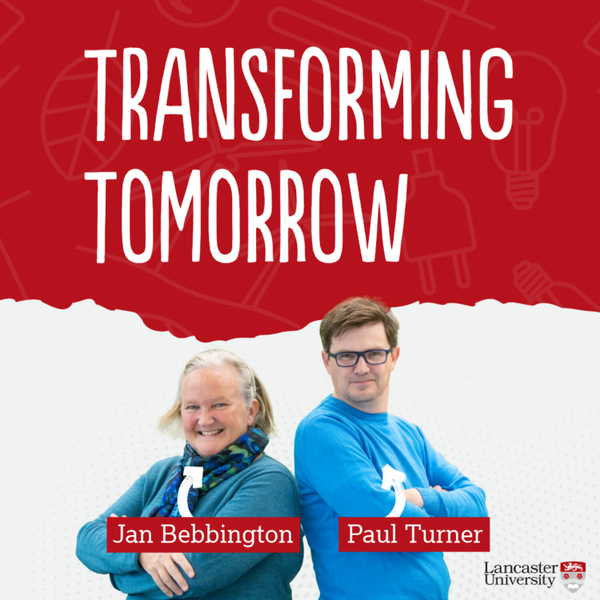
Transforming Tomorrow
Sustainability is key for any business that wants to build a lasting legacy. From carbon footprints to biodiversity to modern slavery, seabeds to factory floors, everything matters.
On Transforming Tomorrow, we make the complex understandable, the theory practical, as we guide you through the ever-changing and often exciting world of sustainability in business.
Speaking to internationally renowned experts and business leaders, we uncover how to mainstream environmental, social and economic sustainability into purposeful business strategy and performance.
Whether you are leading transition in your business, want to build a corporation with a green heart or change your individual actions, or just want to know more about how space weather might affect your operations, Transforming Tomorrow is the show for you.
Hosts Jan and Paul bring insight, perspective, and not a little amount of disagreement, to all the subjects, helping you find the message among the madness.
Join us every Monday to uncover new insights and become a little more inspired that you can make a difference.
You can find transcripts for most episodes at: https://www.lancaster.ac.uk/pentland/resources-for-education-and-practice/transforming-tomorrow-podcast/transcripts/
Send your questions on any of the issues we discuss in Transforming Tomorrow to [email protected] or fill in our feedback form here: https://forms.office.com/e/7Bw4rDiRDt
Find out more about the Pentland Centre and its work here: https://www.lancaster.ac.uk/pentland/
Meet the Hosts
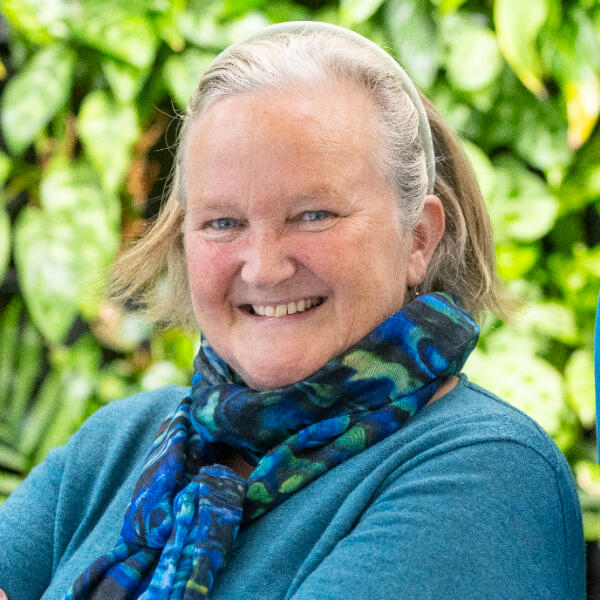
Professor Jan Bebbington is the Director of the Pentland Centre for Sustainability in Business at Lancaster University. Jan is an expert on accounting, benchmarking (to her co-host’s annoyance), and how business and sustainability intersect.
Jan loves nature and wants to protect it – and hopes she can change the world (ideally for the better). She is also motivated to address inequality wherever it is found and especially to eliminate forced, bonded or child labour. Transforming Tomorrow is one small step on that quest.

Paul Turner is a former sports journalist who now works promoting the research activities in Lancaster University Management School – a poacher turned gamekeeper as his former colleagues would have it.
Paul has always been interested in nature and the natural environment – it comes from growing up in Cumbria – and has been a vocal proponent of the work of the Pentland Centre since joining Lancaster University. He does not like rankings and benchmarking, and is not afraid to say so.